
Decades ago, we gathered with my aunt and some of her kids on Christmas Eve. My uncle was home with one of the daughters, unable to join the celebration because of spinal tumors that caused debilitating pain. At the time, my dad worked as editor-in-chief of the Sears catalog and had just released a catalog for home medical equipment.
My aunt arrived and was starting to settle into the couch. She was enjoying a drink and some appetizers.
My dad, with wonderful intentions, proudly presented the catalog to my aunt. He wanted to be helpful and thought a catalog of what he perceived to be solutions she needed would, in fact, help her.
I could see how she received the catalog: Like it was the last thing in the world she wanted. She wanted to simply be present for Christmas Eve without reminders of what too much of her life had become — doctor’s appointments, treatments, pain meds, consults with specialists, hands-on care.
She loved the holidays. She wanted just a few hours to simply love the holidays.
During her caregiving experience, my aunt missed her life. Before the presentation of the catalog, she was relaxing and enjoying a social event, something commonplace before her caregiving experience began that had become a rare opportunity. The catalog turned the gathering, a pleasant distraction from her stress and worries, into a caregiving event.
In our Family Caregiver Stress Survey that asks family caregivers about the source of their stress, almost 70% of the 1,359 respondents select that they miss their lives.
I thought of this story when I read that the University of Wisconsin–Madison recently launched a clinic to support unpaid caregivers at one UW Health medical center in Madison. For the past two years, I have been trying to connect with a nurse practitioner to create a practice focused on family caregivers as patients. I think I finally found one and we’re having interesting preliminary discussions. So the article captured my attention: They did it, I thought.
Except that the clinic focuses on teaching family caregivers how to provide care. Consider the disciplines staffed in the clinic: nutritional dietetics, nursing, occupational therapy, physical therapy and rehabilitation psychology. The announcement mentions that the clinic will provide “take-home resources to help them obtain needed respite and equipment, including grab bars and shower chairs.” The article also includes this quote:
“We believe caregivers are the backbone of our healthcare system, and too often they are invisible,” said Beth Fields, clinic co-director and associate professor of occupational therapy at the UW–Madison School of Education. “We are working to build a future in which caregivers are seen and empowered to promote the health of their family and friends — and themselves.”
Think about this quote. The professor states that family caregivers are invisible, then puts their health last in her own sentence after the statement about caring for others.
For me, this clinic sounds like giving family caregivers more responsibilities by teaching them about more work to do for the caree. In many ways, the clinic feels like an extension of a caree’s hospitalization during which we receive instructions and plans and must-dos.
I also believe this kind of clinic will meet the needs of some family caregivers but not all. Data from 542 family caregivers who completed the Non-Reimbursed Family Caregiver Savings Calculator indicates that 84.7% provide emotional support to a caree while 57.7% provide personal care. The clinic staffs for the second but not for the work almost all of us do.
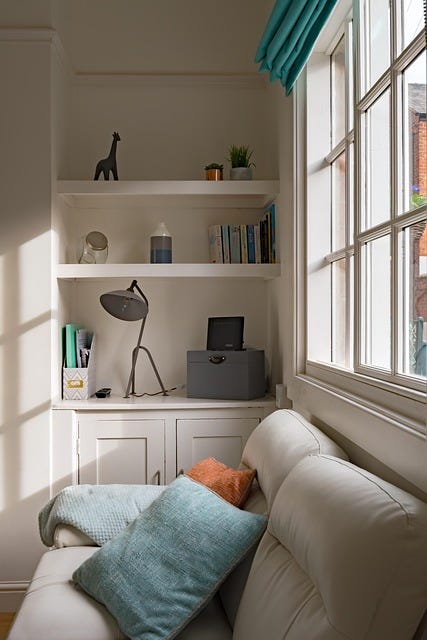
When I envision a clinic for family caregivers, I think of a place to get a break from the pressure of being the 24/7 provider of care. I see a nurse practitioner completing an exam and really talking about the family caregiver’s health with compassion and understanding. We experience specific health challenges, like managing our stress, during caregiving. We need to connect with a professional who offers realistic strategies for our well-being that we can integrate into our already complicated day.
I think of offering programs so family caregivers can role-play how to discuss their caregiving experiences with friends, at work and with a manager. I envision educating family caregivers so they can effectively manage conflicts and disputes within the family system. I think of hosting meetings during which family caregivers gather to share honestly about their days, especially about what they miss about their lives, and to share about resources they use. I think of classes to help us write out our worries and to create experience maps that illustrate our complex role. I think of a drop-in space with comfy couches that hold a family caregiver who needs time for herself.
I dream of a space where family caregivers visit to resolve problems, like a wheelchair that needs an adjustment for comfort, a billing error that needs an advocate for resolution, and a worry that needs a compassionate listener to resolve.
I think of a clinic staffed with former family caregivers who get it.
When family caregivers leave this dream of a clinic I have, I want them to leave with hope because they feel less alone in their lives. I want them to leave feeling relieved because they connected with a group who saw them as more than a family caregiver. I want them to leave feeling lighter because they have less work to do. I can’t imagine giving them a brochure that lists how to find respite and get medical equipment. It’s like handing a family caregiver a catalog of home care products on Christmas Eve.
What would you love to receive from a clinic specializing in supporting family caregivers?
Resources
- Why Is Caregiving So Hard?
- Image by Atanas Paskalev from Pixabay
